 English
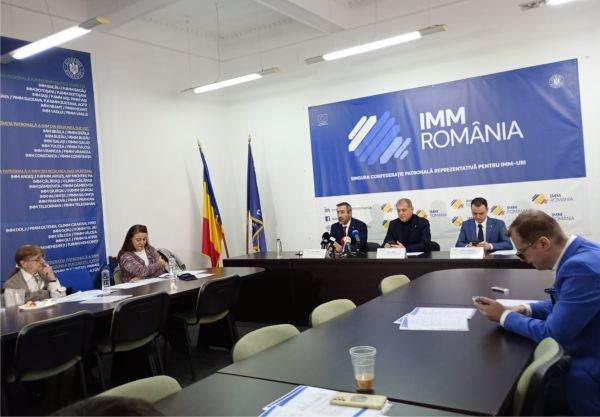
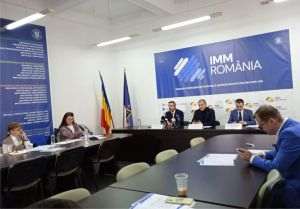
The minimum wage must be maintained at its current value in 2026, even though on Wednesday evening the governing coalition decided that, from July 1 next year, the respective income will rise to 4,325 lei, declared Florin Jianu, president of IMM Romania, during a press conference he held yesterday at the headquarters of the employers' confederation.
He stated that the way in which the leaders of the governing coalition made the decision to increase the minimum wage represents "a lack of respect for what social dialogue means”, because it was not established in the National Tripartite Council, as required by law.
Florin Jianu said: "In the economy, I believe that decisions should not be made in a strictly political coalition. Decisions should be made, first and foremost, by economic reality. When we presented the fact that the minimum wage in the economy must be maintained in 2026, we based ourselves on the analyses we conducted, on what is happening in the economy at the moment, on the increased taxes and duties, on the way SMEs are affected and will be affected in the following year, on the lack of competitiveness, on the fact that companies are closing. This year alone we have 136,000 closed companies, more than in 2024, and the data for 2025 are those reported at the end of October."
Added to this picture are the over-excise of fuels, the increased VAT, the high energy prices and the new taxes and duties that come into force on January 1, said the president of IMM Romania, who added that "political decisions or political barter should not prevail in this country".
Florin Jianu specified: "I saw a dialogue in which a political party agrees to increase the minimum wage in the economy, but in exchange for lowering the minimum tax on turnover to 0.5% and eliminating it in 2027. Now, what an economic decision this is, to lower a tax for companies, especially since there are companies, such as those in the distribution of goods, that have a gross income of 1.2%, which means that entrepreneurs borrow to pay this tax".
The President of IMM Romania reiterated that the employers' organization he leads maintains its position that, for 2026, it was more necessary to maintain the minimum wage, to re-establish the economy and to start economic recovery measures, and subsequently, in the second half of next year, to start negotiations to increase the respective income.
Florin Jianu showed that minimum wage increases are legitimate demands and that IMM Romania has consistently supported such increases. "You always know that we agreed. There were years when employers requested more substantial increases than unions requested." He mentioned that the evolution of the gross minimum wage from 2,250 lei in 2022 to 4,050 lei currently represents "an exponential increase, well above the accumulated inflation rate in recent years," possible because the economy allowed this, and "the first to request the increase were entrepreneurs."
The head of IMM Romania warns, however, that currently the business environment can no longer support a new wage increase, as it would affect the activity of companies. In fact, the data presented by Florin Jianu are relevant: "Eight out of ten companies have stated that they are already affected by the measures taken, and three out of ten will lay off people”.
These realities should be taken into account when making decisions, which should not be "strictly political, strictly electoral assumptions”.
In the opinion of the president of IMM Romania, the exclusive focus on the minimum wage masks the fiscal reality. "We are clinging to one thing, this of the minimum wage in the economy, in which the Government, in fact, is fooling us all. It collects more, it costs the entrepreneur more, and the employee does not see more money in his pocket, because the state has already taken 50-60% of them before the employee sees that money”.
We note that, in addition to increasing the minimum wage to 4,325 lei, starting July 1, 2026, the governing coalition also agreed on . a 10% reduction in central administration expenditures, without affecting basic salaries, a 10% reduction in the lump sum received by senators and deputies, a reduction in subsidies granted to political parties, a reduction to 0.5% of the minimum turnover tax starting January 1, 2026 and its elimination from 2027, with the measures to stimulate the economy to be detailed before the adoption of the budget for next year.
• The labor market, strained by the Government's decisions
The Government is preparing to amend the legislation on immigration and bringing in labor from abroad, but the accreditation process for recruitment companies must be built on clear, transparent and non-discriminatory criteria, so as not to generate blockages, risks and additional costs for the private sector, declared, during the press conference, the president of the Employers' Confederation of Romanian Labor Importers (PIFM), Romulus Badea.
He stated: "We believe that the final version of this legislative act should be the result of a dialogue between the private sector and state institutions, so that the state's objectives are in balance with the needs of the economy. We would not want these regulations to bring additional risks and costs for the private sector, so that employers in Romania no longer have access to the labor force they need." In order to prevent such effects, IMM Romania proposes the carrying out of short-term and long-term impact studies, which would analyze both the costs and the risks to which Romanian employers will be exposed.
At the same time, the PIFM president stressed that the accreditation process for recruitment companies must be open and fair, "based on clear, transparent and non-discriminatory criteria, so that small and medium-sized enterprises also have access to this activity, to the exercise and provision of these services”.
Romulus Badea also drew attention to the need for a fair sanctioning system, in which each actor is strictly responsible for their own actions.
"We would like the sanctioning system provided for by these legislative amendments to be fair and each recruitment agency or employer to be responsible for its own actions, not to be responsible for the actions of third parties or for situations that are not under their control”, said Romului Badea, who added: "Last but not least, we would like state institutions to assume responsibility in this immigration process and to establish clear and binding deadlines for resolving immigration cases”.
The President of the PIFM warned that, once the regulatory act enters into force, over 73,000 applications submitted online and scheduled for work permits on the portal of the General Inspectorate of Immigration could be canceled, a situation that would have major economic consequences, translated into the loss of thousands of working hours for the preparation of files, for the testing and selection of candidates, to which are added the costs for practical tests in the countries of origin of the workers.
The effects would be felt directly in key sectors of the economy, said Romulus Badea, who specified: "These people will no longer arrive in the summer, as they were scheduled, they will no longer be present on construction sites in major infrastructure works, they will not be in tourism during the summer season, they will not be in factories to honor the offers already contracted. This will mean penalties, delays, damages for companies that are already being tested during this period". .
At the same time, the PIFM president stressed that recruitment agencies acting in good faith must be protected by the state against illegal and uncompetitive practices, and sanctions must be firmly applied only where guilt is proven.
"From information circulated in the public space, there are situations that show that recruitment agencies are guilty of their duty (...). The employers' association I lead and its members publicly disassociate ourselves from the agencies and individuals who, under the guise of labor recruitment, were actually involved in secondary, illicit migration processes or human trafficking,” said Romulus Badea.
The PIFM president concluded by demanding that the state make a clear distinction between honest actors and those who violate the law in the field of labor migration.
• Entrepreneurs no longer believe in the political class
The negative impact of the ruling coalition's decisions is also reflected in the decline in business confidence in the political class and in Parliament, according to a survey on the voice of entrepreneurs in society, conducted by IMM Romania and presented yesterday by Florin Jianu.
According to the survey cited, eight out of ten entrepreneurs believe that political party programs do not contain pro-business components, while 11.3% say they have identified them. The most anticipated measure by entrepreneurs is the 5% reduction in labor taxation, mentioned by 42% of respondents, followed by the establishment of a tax threshold for micro-enterprises at 500,000 euros.
13% of entrepreneurs participating in the survey support progressive taxation, and 12% want to maintain the flat rate of 16%.
Reducing taxation is the main expectation from the political environment, followed by stability, predictability, programs for SMEs and reducing bureaucracy.
The economy is considered by 50% of the responding entrepreneurs to be the most important component of a government program, and education by almost 30%.
The majority of entrepreneurs, namely 95.8%, consider that their interests are very poorly or almost not at all represented in Parliament.
"We have a quasi-unanimous response regarding the fact that entrepreneurs do not find their interests represented at this time in Parliament”, declared Florin Jianu, emphasizing that 45.9% of entrepreneurs demand consultation with the business environment before amending economic legislation, simpler and clearer laws, an increased role for employers' associations and real support platforms.
The President of IMM Romania stated: "79.4% of entrepreneurs believe that they should be more involved in consultations on economic policies, while 42.8% believe that the voice of entrepreneurs influences little or no measures adopted, and 30% perceive some influence. Almost 80% say that political party lists should include people with relevant experience, while 86.1% of entrepreneurs believe that decision-makers, in general, politicians and government officials in the public space do not have the necessary training to support the business environment”.
According to the survey conducted by IMM Romania between November 25 and December 10, in which 1,094 small and medium-sized companies participated, 57% of them support the introduction of entrepreneurial education as a mandatory subject in school, 38.7% want it to be an optional subject, which means that 95.9% believe that it should exist in schools from an early age. Education is necessary, because the data shows that 5 out of 10 entrepreneurs say that higher education graduates are poorly prepared or not at all prepared to develop businesses, 18% consider them moderately prepared and only 1% well prepared.
Regarding trust in institutions, the same survey shows that "entrepreneurs have the highest trust in the army in 1st place", followed by the church, while employers' associations have a degree of trust of approximately 33%, and "the Parliament, the Government and political parties have the lowest degree of trust", Florin Jianu specified.
The companies that participated in the survey are from different fields, such as services, trade, IT and transport.


























 Euro
Euro Dolar SUA
 Franc elveţian
 Liră sterlină
 Gram de aur



























Reader's Opinion